
NASA has moved into a new phase of work on the PRIMA (PRobe far-Infrared Mission for Astrophysics) space telescope, designed to investigate the formation of the universe and a previously under-explored chapter of billions of years of cosmic evolution. In an announcement on September 23, 2026, the agency said the mission had advanced to the Phase B stage of development.
Science
NASA Begins Development of PRIMA Telescope to Study the Far-Infrared Universe
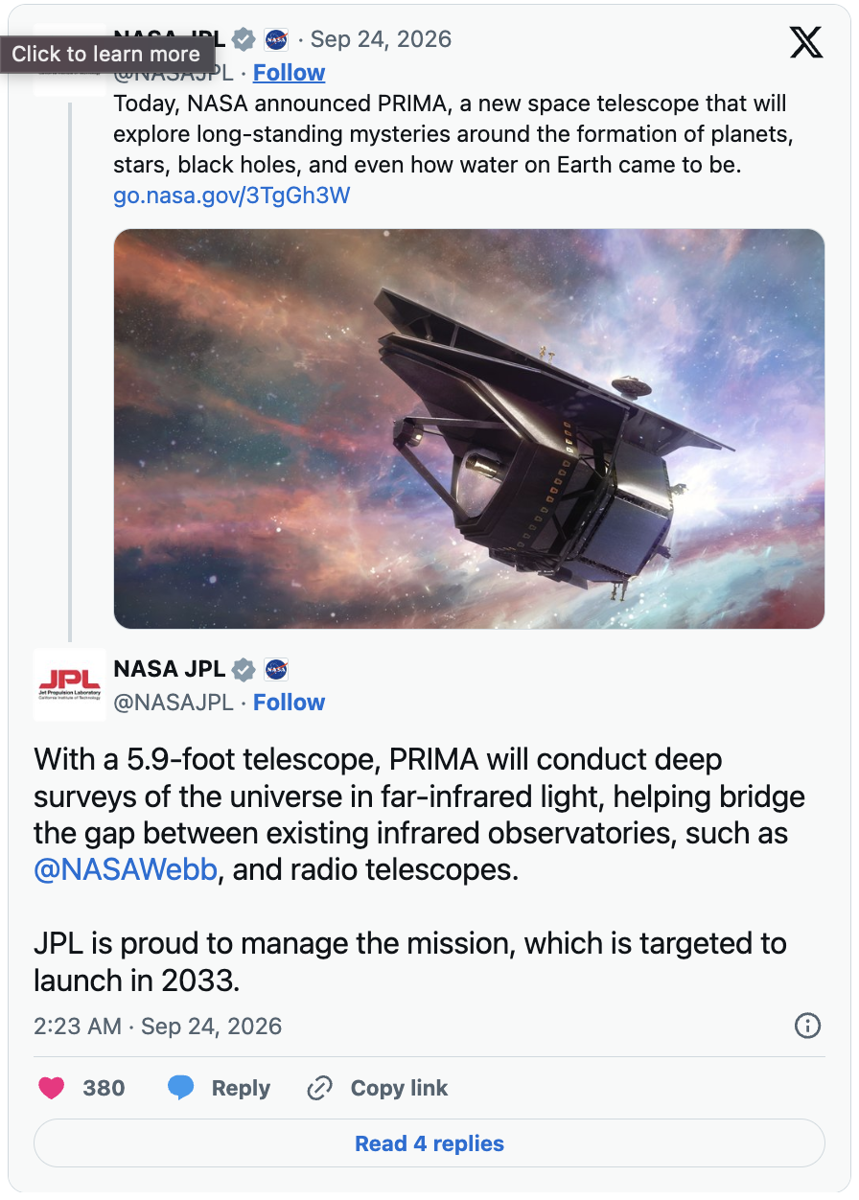
NASA has begun developing the PRIMA space telescope, which will study the far-infrared universe. The telescope, the first example of a new mission class, is planned for launch in 2033.
PRIMA's most distinctive feature is that it will carry out its observations in far-infrared wavelengths. This region will fill an important observational gap between existing infrared observatories such as the James Webb Space Telescope and radio telescopes. According to NASA, this will allow certain cosmic processes that are not clearly visible at other wavelengths to be studied directly.
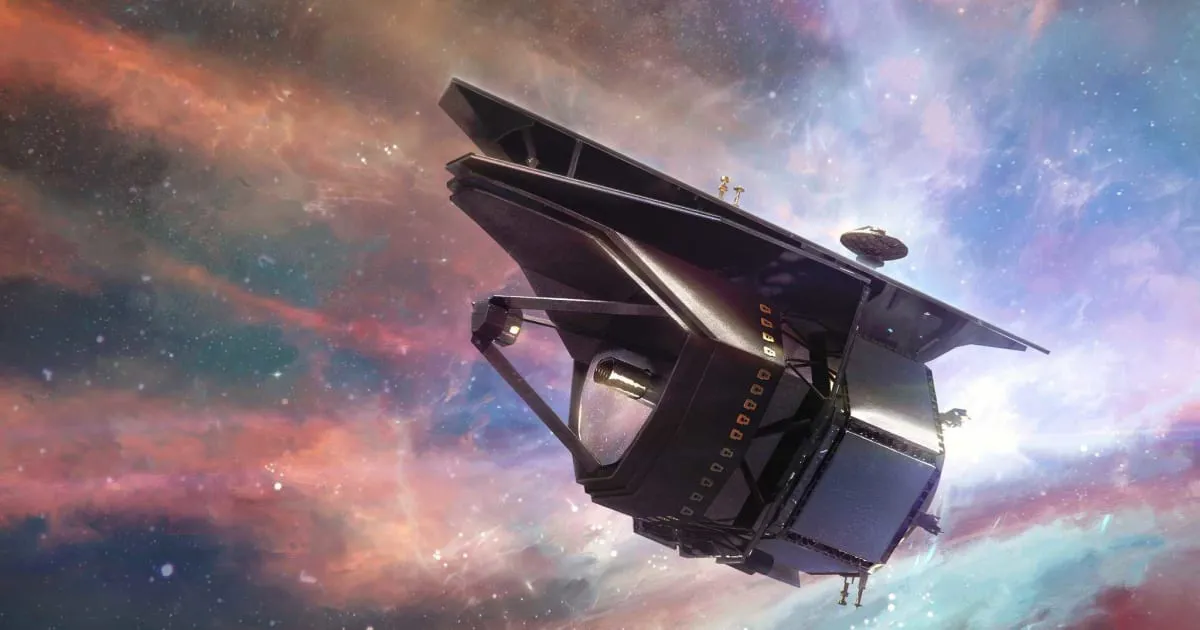
A 1.8-meter telescope will be used
PRIMA is planned to have a telescope with a diameter of approximately 1.8 meters. The same size was confirmed in NASA's previously published mission definition, which also states that the mission will focus in particular on the formation of planetary systems, stars, galaxies, supermassive black holes and cosmic dust.
PRIMA's scope will not be limited to capturing images. The mission aims to gather information about the chemical and physical structure of celestial bodies by studying the properties of far-infrared radiation. This could help researchers track how galaxies have changed over time, as well as the formation of stars and planets.
Scientific work on the mission's technical infrastructure indicates that the telescope is planned to be cooled to very low temperatures and will use sensitive infrared detectors. A 2025 PRIMA technical study reports that the observation system is planned to operate in the 24 to 264 micrometer range and that the telescope is expected to be cooled to approximately 4.5 kelvin.
It will not replace James Webb
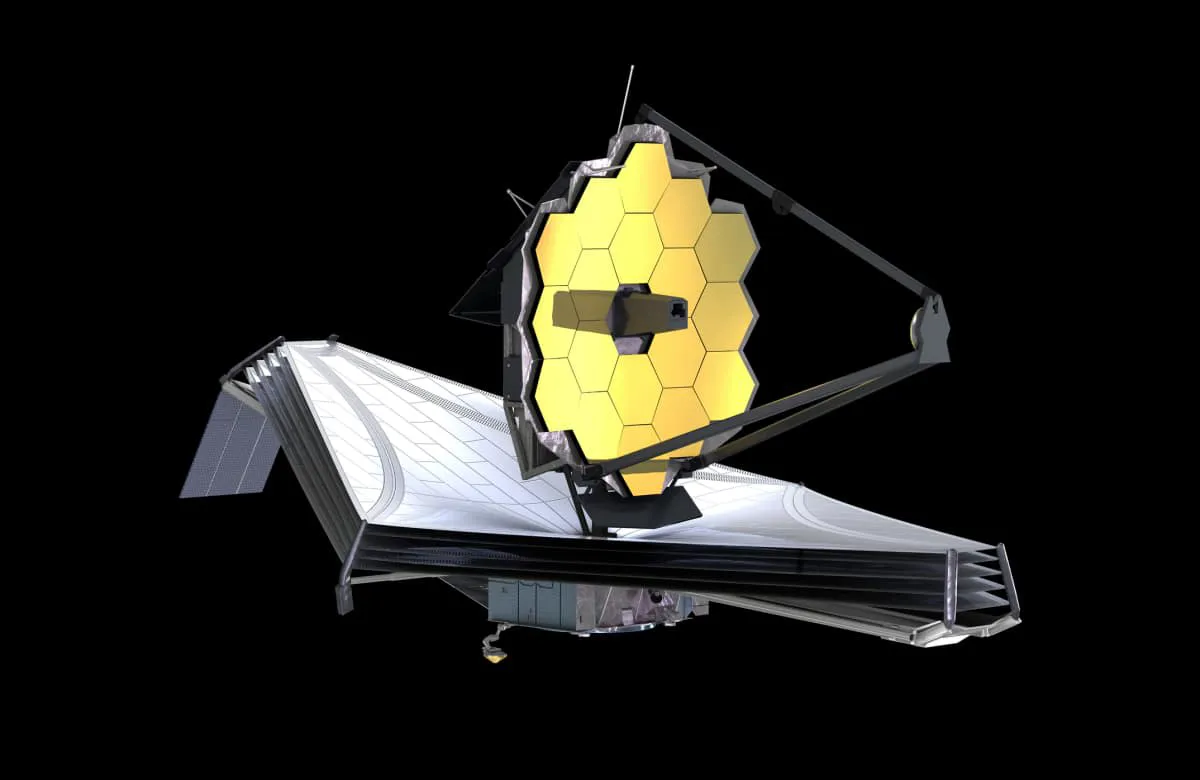
PRIMA is not intended to replace the James Webb Space Telescope. The two observatories will operate at different wavelengths and complement each other.
According to NASA's mission definition, PRIMA aims in particular to fill the observational gap between James Webb and radio telescopes by studying radiation that emerges in the far-infrared. This approach could allow astronomers to build a more comprehensive picture by studying the same cosmic objects at different wavelengths.
In this sense, it is more accurate to regard PRIMA not as a direct rival to existing telescopes but as a new part of the multi-wavelength observation network used by astronomers.
A broad field of research, from planets to black holes
The scientific questions NASA has prioritized are quite broad. PRIMA is planned to investigate in particular the following topics:
- How planets and planetary systems outside the Solar System formed,
- How galaxies have grown and changed over cosmic time,
- The relationship between supermassive black holes and the evolution of galaxies,
- The formation and life cycles of stars,
- How cosmic dust and heavy elements have accumulated over time,
- A better understanding of processes related to water and planet formation.
Dust is a particularly important issue. Star-forming regions can be largely hidden in visible light by dense dust, while infrared observations make it possible to study the radiation coming from these regions. NASA's SPHEREx mission also demonstrates the scientific value of this approach by surveying the entire sky at different infrared wavelengths; PRIMA, meanwhile, will focus on much longer wavelengths.
When will PRIMA be sent into space?
Under NASA's current plan, PRIMA is targeted for launch in 2033. The mission's planned operational lifetime is five years. However, this is not a finalized launch date; according to NASA's announcement, the project will first go through another approval process in which its technical, programmatic and cost performance will be evaluated.
The upper limit for the mission's project cost has been set at $1.2 billion. This figure does not include launch costs and some other non-project costs.
The first example of a new NASA mission class
Another feature of PRIMA is that it is the first representative of a new astrophysics mission class NASA calls Probe Explorers.
In 2024, NASA selected two different concepts for detailed study under this class: PRIMA's far-infrared observatory concept and the X-ray observatory AXIS. Both projects were put forward for further evaluation, and NASA later decided to advance PRIMA in the development process.
NASA's Jet Propulsion Laboratory (JPL) will be responsible for managing PRIMA. In addition to NASA's Goddard and Marshall centers, institutions from France, Italy, Germany, Canada, South Korea, Japan and the United Kingdom are also contributing to the project.
The real goal: understanding how the universe became what it is today.
PRIMA's importance does not stem from a single discovery objective. The observations the telescope will make in the far-infrared are intended to examine the formation processes of stars, planets, galaxies and black holes as different parts of the same cosmic story.
In NASA's words, the mission will open a new observational window for better understanding the formation and development of the universe over time. But the telescope is not in space yet: the 2033 target depends on the successful completion of ongoing development and approval processes.
Source verification was based on NASA's official announcement dated September 23, 2026; it was cross-checked with NASA's 2024 mission selection, NASA Science mission pages, the UKRI statement and PRIMA's technical studies.
Comments (0)
Log in or sign up to leave a comment.
No comments yet. Be the first!